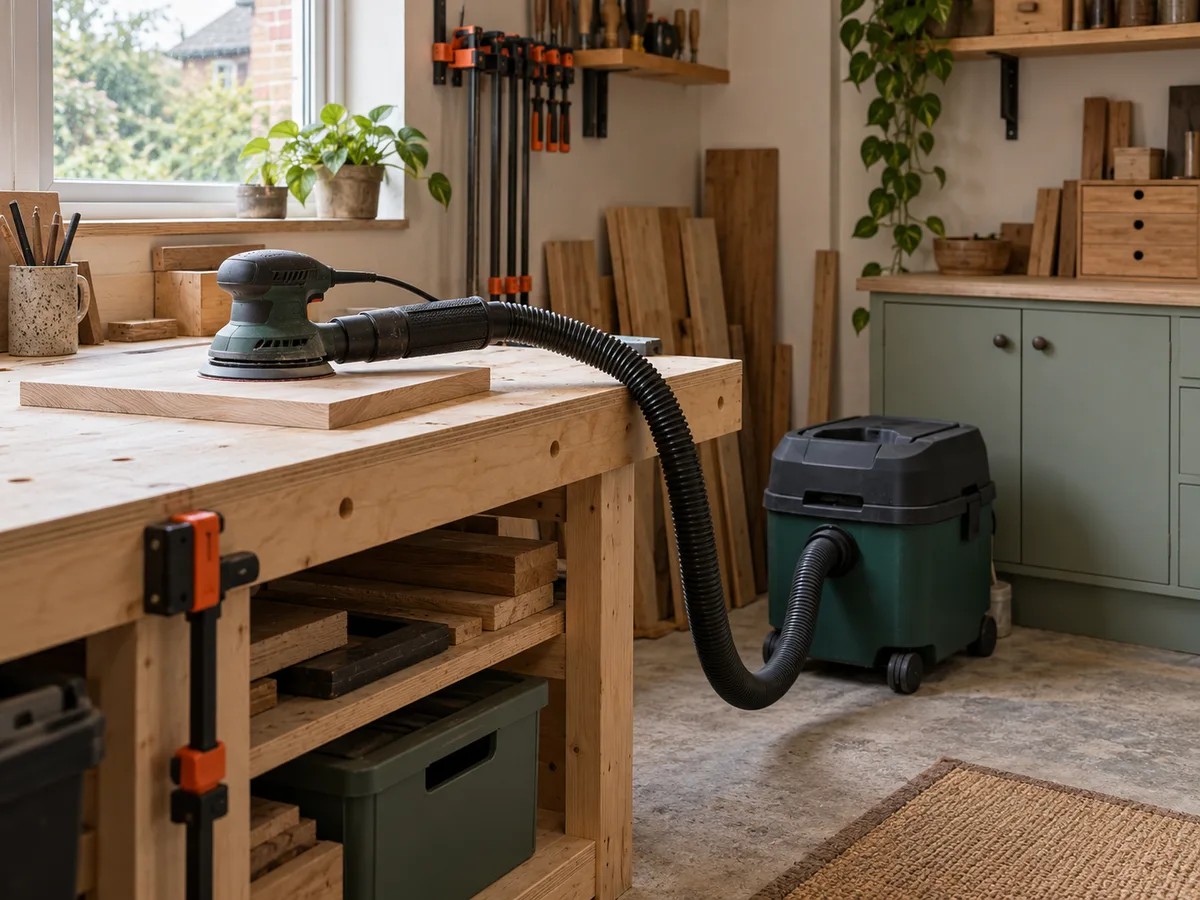
Start with a list of your machines and tasks, rather than a shopping list. An extractor that is convenient for a hand sander may not meet a table saw's requirements. Our suggested planning order is to establish what each machine needs, identify the connections, then ask the extraction supplier to confirm the complete arrangement.
Make a machine sheet
| Record | What to look for |
|---|---|
| Exact model and revision | Rating plate and the matching manual |
| Extraction connections | Every port, including a separate blade-guard connection |
| Required performance | Maker's airflow requirement and its measurement conditions |
| Practical use | Which machines will run together and where the hose must reach |
| Consumables | Specified filter, bags and replacement parts |
HSE's buying guide explains that effective local exhaust ventilation (LEV) needs a suitable hood, air movement, ducting and safe handling of the collected contamination. A motor's headline rating does not describe that whole system. Ask the supplier how performance will be checked at the machine, and request the instructions and maintenance information.
Use three separate checks
Connection: can the specified hose connect securely, without compromising a guard or access to controls?
Performance: does the supplier confirm the required airflow with the intended hose, fittings and filter? Do not treat a maximum free-air figure as delivered airflow at a tool.
Dust handling: is the complete extractor appropriate for the material and task, including emptying and cleaning? HSE recommends at least a Class M industrial vacuum for clearing settled wood dust. Read the extractor class guide before choosing equipment.
Turn the plan into a routine
Keep the manuals beside your machine sheet. Add a place to record inspection dates, replacement bags and faults. Decide where the extractor will stand, how you will access the container and how you will keep hoses out of walking routes. These are planning prompts, not a substitute for a competent extraction design.
Use the extraction planner to organise the figures you already have. An unknown value is a question for the maker, rather than permission to assume compatibility. For a workplace system, ask a competent LEV supplier to specify, commission and maintain it.
Sources & further reading
Checked 2026-10-25. Manufacturer figures are specifications, not independent performance tests.