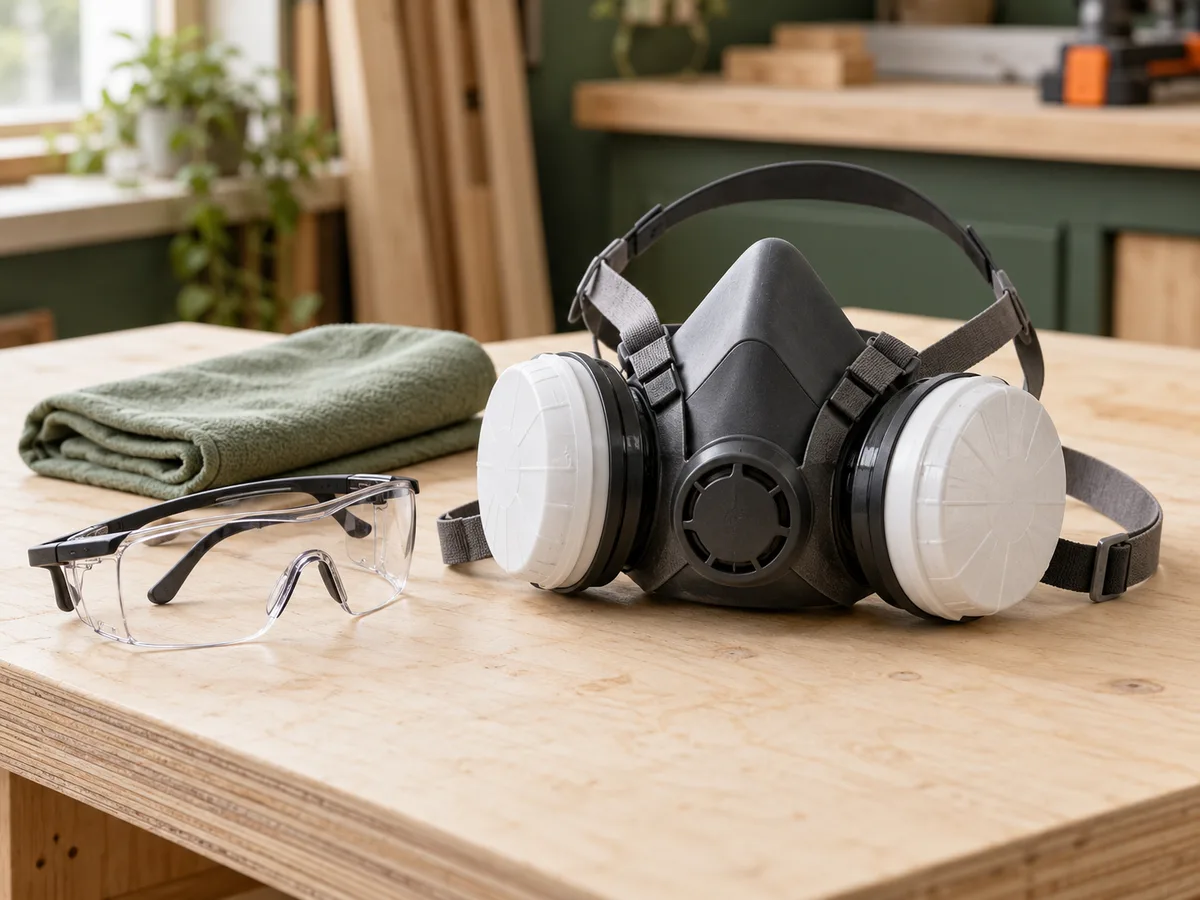
Choose respiratory protective equipment (RPE) as part of the dust-control plan. HSE says it should complement measures such as extraction. The task, wearer and environment all matter; a filter label by itself is not a completed selection.
What HSE says about wood dust
HSE's woodworking FAQ describes RPE with an assigned protection factor of at least 20, such as FFP3 or a half-mask with P3 particle filters. It says nuisance masks, FFP1 and FFP2 do not provide sufficient protection for wood dust. Do not interpret the existence of an FFP2 category as a recommendation for a woodworking task.
| Question | Selection issue |
|---|---|
| Is it tight fitting? | The exact make, model, type and size need fit testing for the wearer |
| Is there hair at the face seal? | A tight-fitting mask cannot form a reliable seal over stubble or a beard |
| Will it be worn for a long time? | Consider suitability and powered alternatives with a competent supplier |
| Is other PPE worn? | Check compatibility with glasses, hearing protection and the task |
| Are vapours also present? | A particle filter alone does not resolve every mixed exposure |
Fit testing and daily checks are different
HSE recommends selecting a facepiece with a competent fit tester. Passing a test for one model does not automatically cover another. A wearer check each time the mask is put on is still needed; it does not replace the selection-stage fit test.
Where facial hair prevents a tight seal, ask about suitable loose-fitting powered equipment rather than buying a tighter disposable mask. Confirm the complete unit's performance and permitted use. “Powered” is not a universal guarantee of suitability.
Before buying
Make a note of the work, materials, expected duration, other PPE and any fit concerns. Ask the supplier about the required filter, fit-testing arrangements, cleaning, storage and consumables. Include maintenance and filter replacement in the comparison, rather than considering the facepiece price alone.
Keep the instructions and use the equipment as specified. Ask a competent adviser to assess unusual dusts, coatings or combined vapour exposure. This page provides general selection guidance and does not assess an individual's health or workplace exposure.
The RPE chooser helps organise those questions; it cannot certify a mask or perform a fit test.
Sources & further reading
Checked 2026-10-25. Manufacturer figures are specifications, not independent performance tests.